





A new-hire kit is more than a box of branded items. It’s one of the first tangible ways your company can say, “We’re glad you’re here, and we thought about what you’ll need.”
But useful kits don’t happen by filling a box with whatever has a logo on it. The best ones combine practical products, wearable apparel and a personal welcome, all selected for the employee receiving them. Whether your new hires work in an office, remotely or across several locations, a considered kit can help make the first week feel more prepared and personal.
What Is an Employee Onboarding Kit?
An onboarding kit is a collection of welcome materials and useful items provided to a new employee before or around their start date. It might include branded merchandise, work essentials, company information and a note from the manager or team.
The kit is a small part of a much bigger onboarding experience. It shouldn’t replace role-specific training, working equipment, clear expectations or conversations with a manager. Instead, it can reinforce those things: a well-chosen notebook supports a first-week plan, and a useful drinkware item can make a home or office workspace feel a little more familiar.
Why Design for the Person Receiving It?
New employees notice whether their first days feel organized and welcoming. In BambooHR’s 2025 onboarding benchmark, 42% of surveyed employees said they felt overloaded with too much information, while 52% said onboarding placed too much emphasis on administration instead of role training. A box full of brochures and one-time-use trinkets won’t address either concern.
A kit can make a better impression when it’s useful, relevant and easy to enjoy. It can also help remote hires feel included, especially when it arrives on time and is paired with a personal note or a scheduled welcome from the team. The package is not a substitute for human connection, but it can help start the experience on the right note.
What to Include, and What to Skip
Start with a simple question: Will this employee realistically use the item after their first week? Choose a few well-made products that fit the role and work environment instead of maximizing the number of items in the box.
Choose useful, quality items
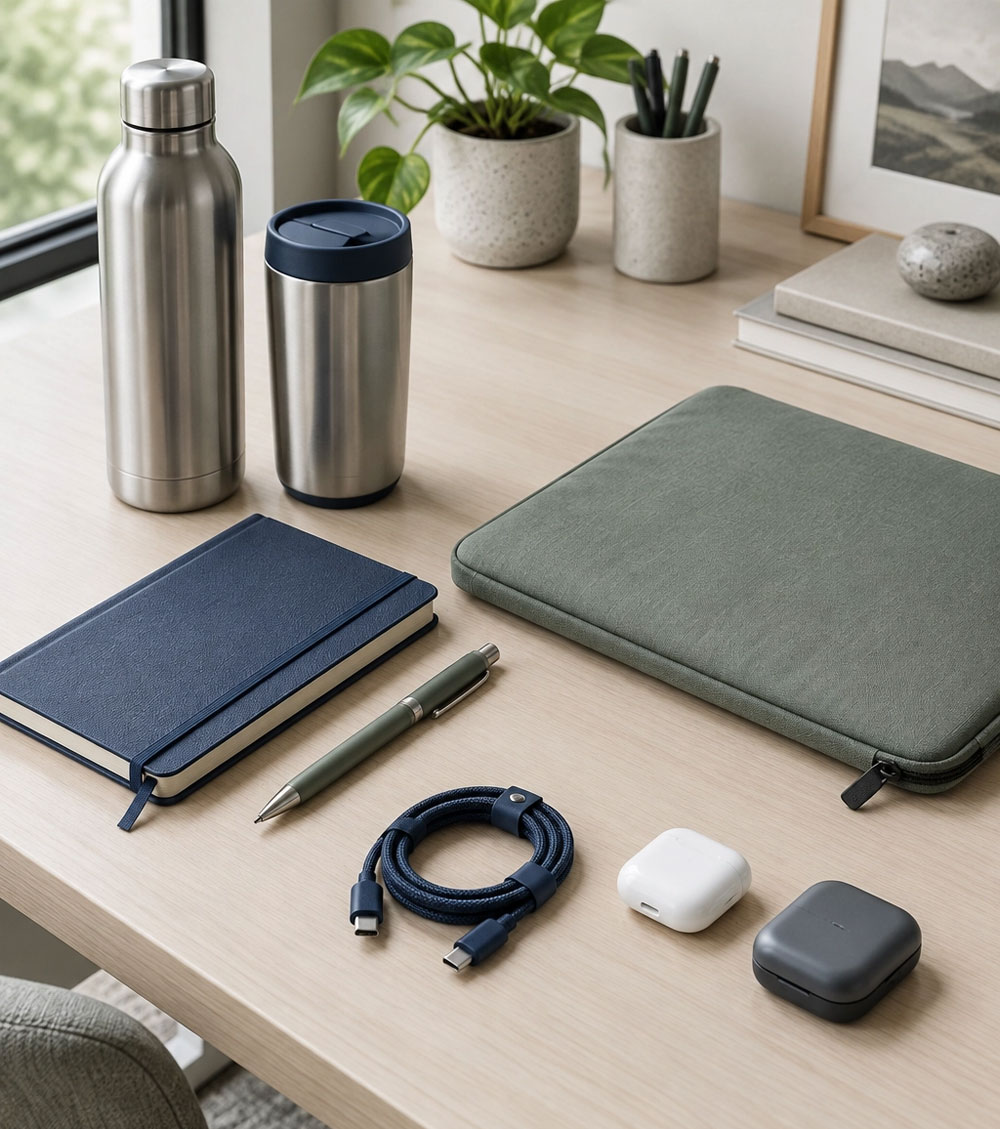
Consider products that help make a workday more comfortable or organized:
- Drinkware: A quality mug or reusable bottle can fit into an office or home routine. Browse Brandables’ business and tradeshow products for examples such as ceramic mugs, or read more about why drinkware makes a practical promotional product.
- Apparel: A comfortable sweatshirt, polo or jacket can become a favorite if the fabric, fit and style are right. Explore promotional apparel, and offer size and style choices when possible.
- Stationery and office essentials: A quality notebook and pen, desk organizer or sticky notes can be useful additions. Keep the selection purposeful rather than adding several similar items.
- Tech accessories: A useful charging accessory, laptop sleeve or other work-from-home item may suit remote and hybrid roles. See Brandables’ work-from-home products and tech promotional item ideas.
- A personal touch: Include a short welcome note from the manager, team or leadership. A sincere message can make a standard kit feel intended for a real person.
Personalize for the role
A one-size-fits-all kit may miss what different teams need. A designer may appreciate a desk accessory; a field employee might use a durable bottle or wearable outer layer; a remote employee may benefit from practical workspace items.
You don’t need a completely different kit for every role. Start with a consistent core, then add one or two relevant options based on job function, location or work setup. If personalization involves apparel sizes, home addresses or preferences, collect only what you need and explain how the information will be used.
Skip the “swag dump”
Avoid filling the box with items that are low quality, hard to use or included only to make the kit look bigger. Novelty products can be fun in the right context, but they shouldn’t crowd out practical items. A single product employees are pleased to keep is often a better choice than several that are quickly forgotten.
Budget Tiers: Build Around a Few Strong Choices
The right budget depends on headcount, product selection, decoration, packaging and shipping. The tiers below are planning examples, not product quotes, and should be adjusted to your organization’s needs.
- Essentials kit: A useful notebook and pen, a basic drinkware item and a personal welcome card. This is a straightforward option for a large hiring group or a program that needs to stay lean.
- Everyday kit: A better-quality mug or bottle, a notebook, a practical tech or desk accessory, and a wearable item such as a tee or cap. This adds choice and perceived value without requiring a large number of products.
- Premium welcome kit: A higher-quality apparel piece, upgraded drinkware, a tech accessory suited to the employee’s setup, and thoughtfully branded packaging. This can work for leadership hires, specialized roles or milestone programs.
To keep spending focused, put more of the budget toward the items employees will use most. Apparel, for example, is worth choosing carefully: a comfortable garment in a style people want to wear is more likely to become part of someone’s wardrobe than a shirt selected only for its low unit cost.
The Logistics Problem: Good Kits Need Good Timing
A thoughtfully designed kit can still disappoint if it arrives late, goes to the wrong address or contains an incorrect size. These challenges grow when hiring happens throughout the year, employees are remote, or kits include several different items.
Before ordering, decide how you’ll:
- Collect and confirm home addresses securely and close enough to the start date to reduce delivery issues.
- Gather optional details such as preferred apparel size, location and role.
- Handle address changes, delayed starts, replacements and employees who prefer not to provide a home address.
- Coordinate inventory, assembly and shipping for each new hire.
- Keep kit contents current as roles, branding and product availability change.
For remote employees, send a clear heads-up that a package is on the way, and share tracking information where available. Have a digital welcome ready too, so the first-day experience doesn’t depend on a parcel arriving exactly on schedule.
The Solution: Let a Fulfillment Partner Handle the Details
When kits are assembled and shipped one by one, storing products, checking contents, packing boxes and managing deliveries can become a drain on HR and operations teams. A fulfillment partner can help organize those steps so internal teams can focus on welcoming and supporting new employees.
Brandables provides warehousing and fulfillment services for businesses shipping to employees across the country. Its kitting services can support assembling items into a complete package, while pick and pack services help process individual orders from stored inventory. The company describes services including inventory receiving and storage, order processing, and domestic and international shipping.
How to Launch an Onboarding Kit Program
A good program doesn’t have to be complicated. Start with a manageable plan and improve it using employee feedback.
- Set the purpose. Decide whether the kit is mainly for workspace readiness, brand welcome, team belonging or a mix.
- Choose a core kit. Select a small number of practical items, then identify optional additions for specific roles or locations.
- Agree on a budget and process. Account for product cost, decoration, packaging, storage, assembly and shipping, not just the items themselves.
- Plan preboarding communication. Tell the new hire when to expect the kit and how to share or update delivery details.
- Coordinate the human welcome. Pair the package with a personal message, a first-week schedule and time with the manager or team.
- Ask what worked. Use a short new-hire survey to find out which items were useful, what went unused and whether the delivery arrived on time.
A successful kit is not measured by how much fits in the box. It’s measured by whether the choices feel thoughtful, useful and true to your company’s culture.
Build a Welcome Kit Your New Hires Will Use
The best onboarding kits combine practical products, wearable apparel and a personal welcome. With quality items, sensible choices and a dependable fulfillment plan, your kit can become a meaningful part of the first-week experience, not another collection of things to clear off a desk.
Contact Brandables to discuss building an onboarding kit program that fits your team, budget and shipping needs.